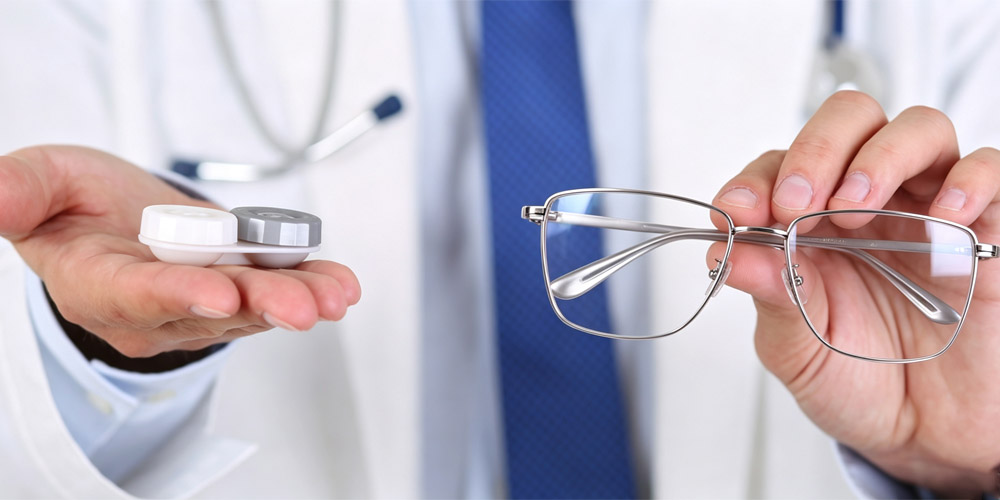
Trying to decide between glasses and contact lenses? The real question isn't which option is universally superior—it's which matches your daily routine, active lifestyle, and eye health. Here is how they compare across key everyday scenarios.
How They Work
According to the American Academy of Ophthalmology (AAO), there is no clinical superiority of one option over the other for most patients. Both correct nearsightedness, farsightedness, astigmatism, and presbyopia effectively:
Glasses
Sit approximately 12 mm from your eyes, bending light through frame-mounted lenses.
Contact Lenses
Rest directly on your cornea, moving naturally with your eye for an unobstructed field of view.
Glasses: Pros & Cons
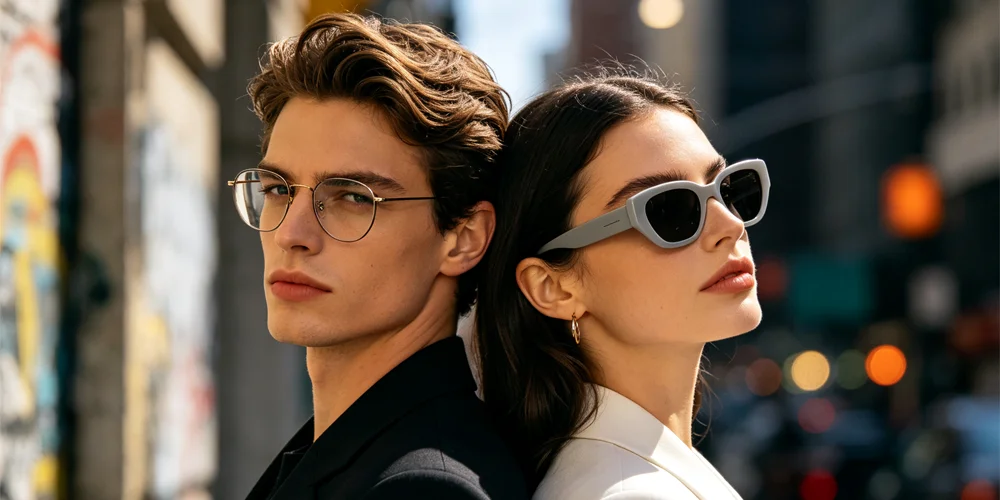
Advantages of Glasses
- Hassle-Free Maintenance: Zero solutions or strict storage schedules required.
- Zero Contact Risk: Does not touch the eye, minimizing infection risks.
- Cost-Effective: A single frame lasts years with proper care.
- Physical Protection: Shields eyes against wind, dust, and UV/blue light.
Disadvantages of Glasses
- Peripheral Obstruction: Frame edges slightly limit side vision.
- Weather Sensitivity: Prone to fogging up or getting rain-splattered.
- Activity Interference: Can shift or slip down during intense sports.
Contact Lenses: Pros & Cons

Advantages of Contacts
- Unobstructed Field of View: Full, natural peripheral vision ideal for driving.
- Built for Movement: Won't fog up or fall off during physical activities.
- Natural Look: Keeps facial features completely frame-free.
Disadvantages of Contacts
- Strict Hygiene Demands: Requires daily cleaning, cases, and replacement routines.
- Risk of Dry Eyes: Reduces oxygen flow to the cornea, worsening dry eye symptoms.
- Ongoing Cost: Higher long-term recurring expenses for lenses and solutions.
Side-by-Side Comparison
| Factor | Glasses | Contact Lenses |
|---|---|---|
| Eye Contact | No (~12mm away) | Yes (directly on cornea) |
| Daily Routine | Minimal (wipe & go) | High (clean & disinfect) |
| Infection Risk | Very Low | Higher if hygiene slips |
| Peripheral Vision | Limited by frame | Wider & natural |
| Weather Resistance | Prone to fogging/rain | Unaffected |
| Long-Term Cost | Lower | Higher recurring cost |
Scenario-Based Recommendation
Choose Glasses If You:
- Spend long hours working on computers or screens.
- Experience chronic dry eyes or seasonal allergies.
- Prefer a low-maintenance, grab-and-go option.
- Are uncomfortable touching your eyes directly.
Choose Contacts If You:
- Lead an active lifestyle or play high-movement sports.
- Require full, unobstructed side vision for driving.
- Prefer a completely frame-free appearance.
- Have a strong prescription that creates heavy lenses in frames.
The Bottom Line
Glasses bring simplicity and long-term value, while contact lenses offer visual flexibility for active days. Many patients find success keeping both on hand to suit different activities.
Find Your Ideal Eyewear Match
Looking for stylish frames or prescription lenses crafted for computer work? Browse our catalog to discover comfortable options for every routine.